For production companies
Fifty matches, one control room
The economics of a production contract are set by how many people you need per match. If that number is one, the contract only works at the top end. The whole point here is to make it a fraction.
How it works
01
Onboard the client
Each league or competition is its own organisation, with its own brand, sponsors and data.
02
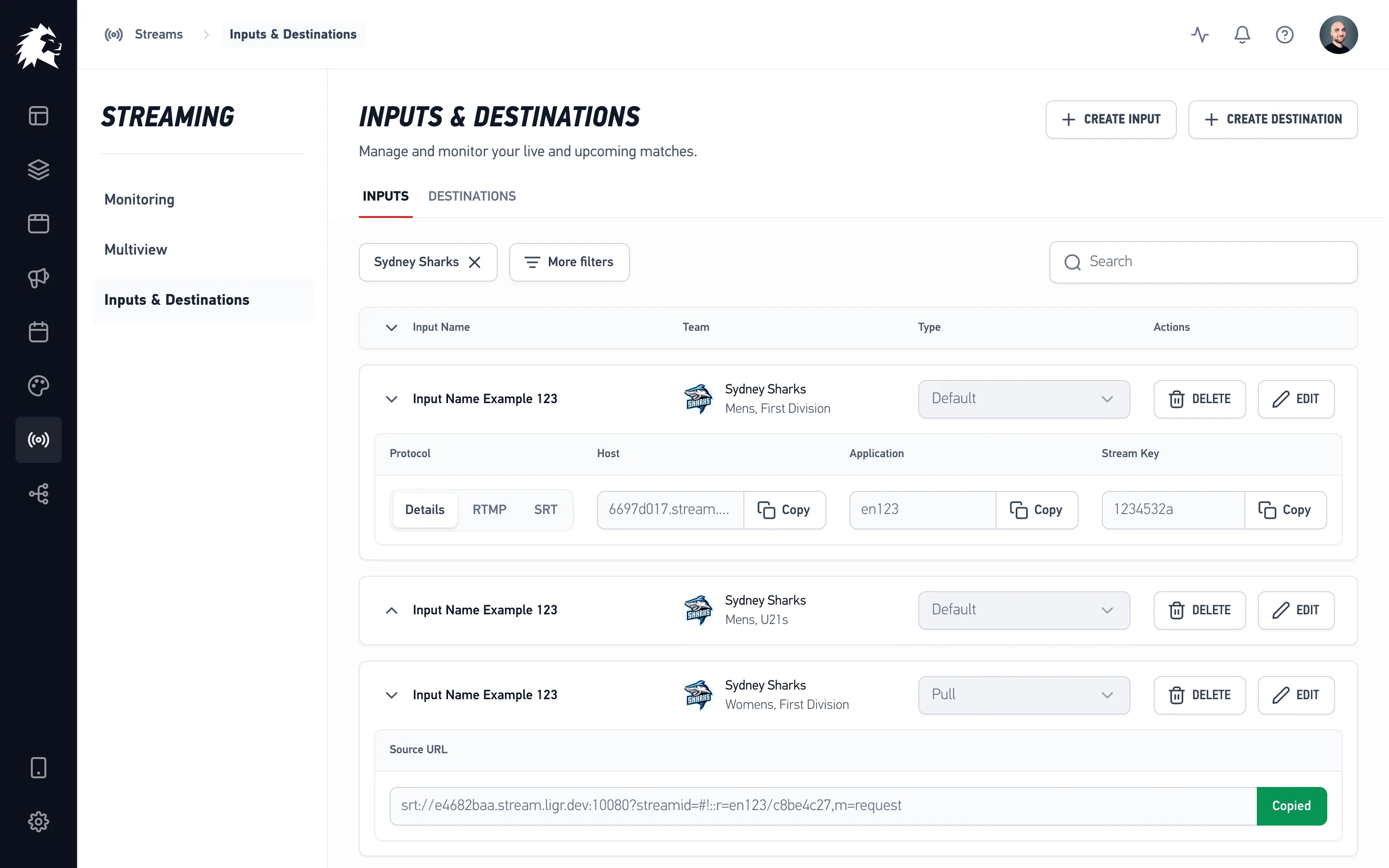
Wire inputs and destinations
RTMP and SRT in from the venues, out to wherever each client publishes.
03
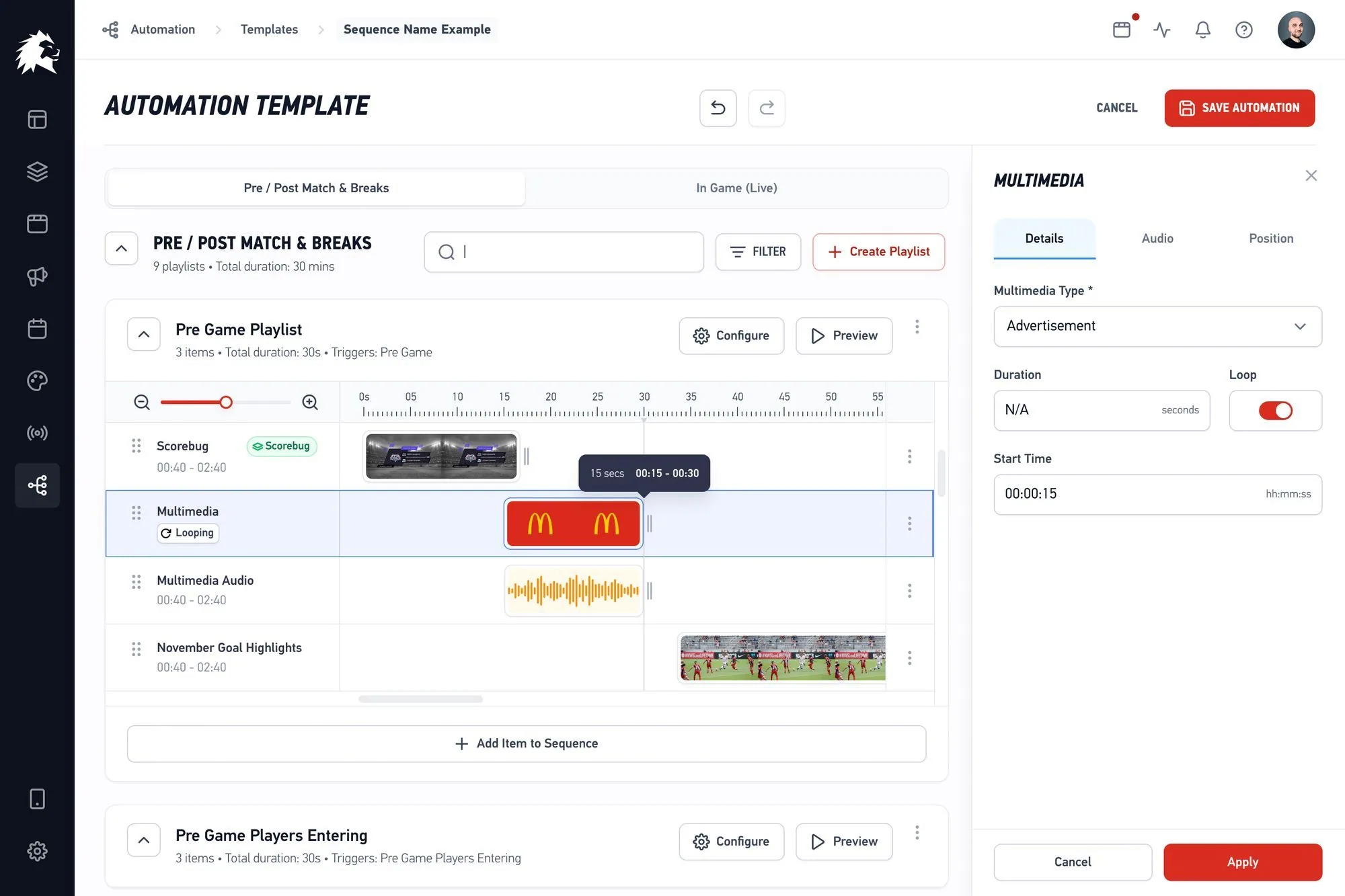
Configure once
A Game Plan per competition, reused across every fixture in the season.
04
Watch the wall
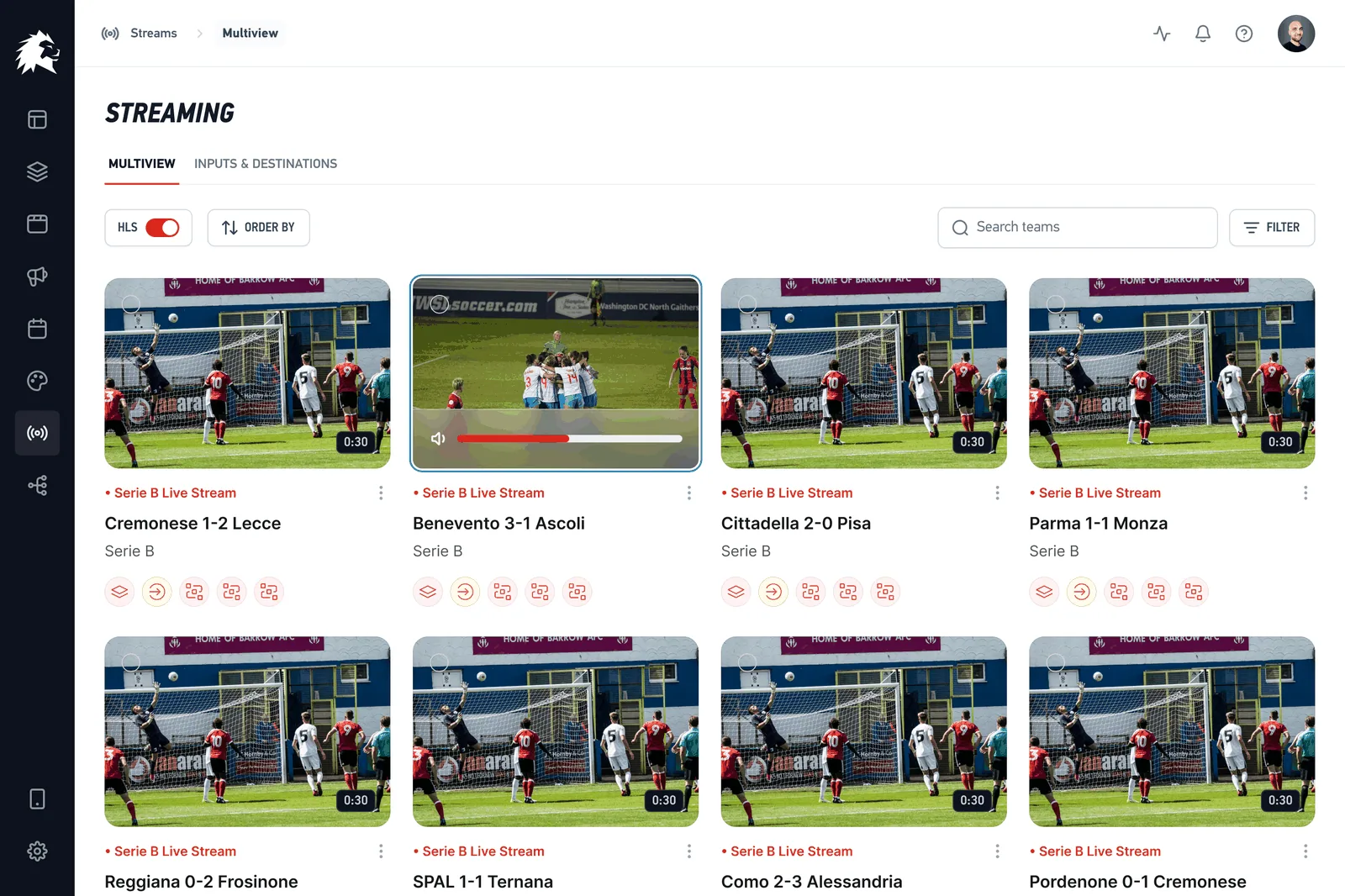
Multiview across every active stream, so one person sees all of it at once.
Multiview
Every stream on one wall
Stream health, audio and graphics status across every match running right now, in one view, across every client you hold. You find the dead feed because you can see it, not because the client rings you.
This is the single piece that changes the staffing model. Monitoring many is a different job to operating one.
Inputs and destinations
Whatever the venue sends you
Ingest is RTMP or SRT, which means the camera system at each venue stops being your problem. Output goes wherever each client publishes, configured per competition rather than per match.
Clients arrive with whatever they already bought. The value of accepting all of it is that onboarding a new contract is configuration rather than procurement.
Multi-client
Separate brands, one operation
Each client is its own organisation with its own themes, sponsors and data bindings. Your team works across all of them from one place, without logging in and out of separate systems or risking one client's sponsor appearing on another's broadcast.
Usage is tracked per client, which is what makes billing back and holding an SLA practical rather than aspirational.
In production
ITF World Tennis Tour
More than 35,000 matches produced in 2026, over 65,000 hours of live tennis, across 104 host cities on six continents, with no graphics operators on site anywhere. That is not a production company scaling its crew. It is a production model where crew size stopped being the constraint.
Read the ITF World Tennis Tour case study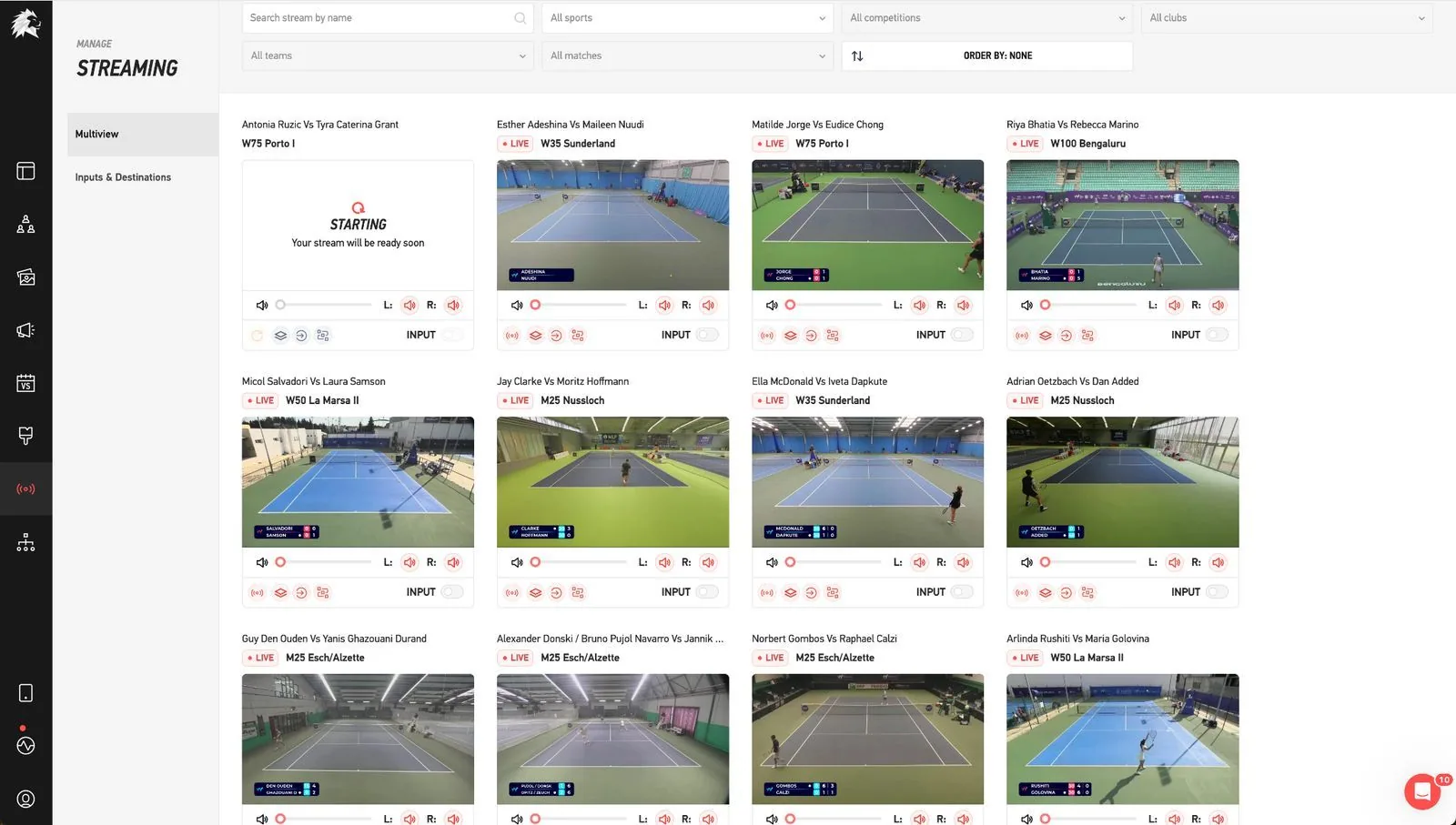
Frequently asked questions
Go deeper
More on the platform
Multi-stream orchestration
One match, many feeds, and Multiview across every stream running at once.
See the orchestration layerITF World Tennis Tour
35,000+ matches in a year, with no graphics operators on site.
Read the case study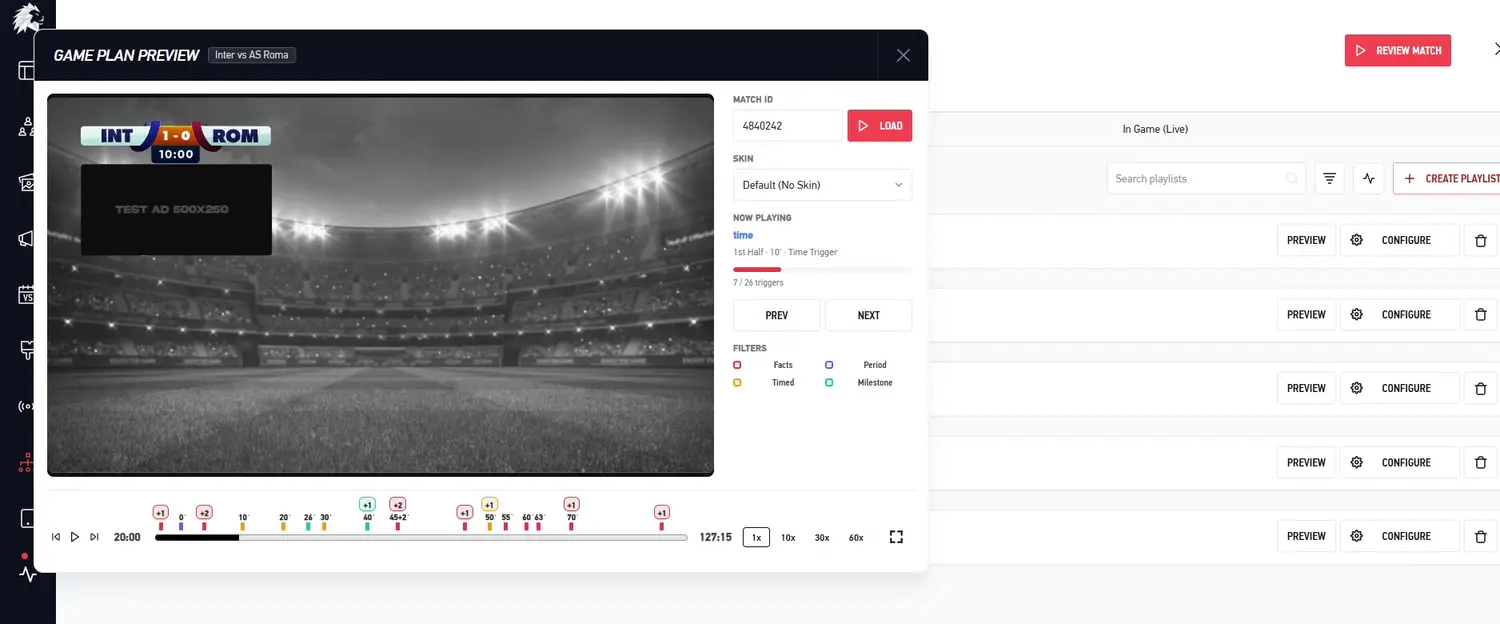
Game Plans
The sequence that lets one person oversee fifty matches.
See Game PlansReady to elevate your sports broadcast?
Join hundreds of organisations using LIGR to deliver broadcast-quality production — from local leagues to national federations.