For broadcasters
Broadcast graphics without the gallery
The graphics chain is usually the most expensive part of a rights deal that nobody watching ever thinks about: an engine per feed, an operator per match, and a room to put them in. None of that is required any more.
How it works
01
Bring the feed in
RTMP or SRT from the venue, the truck, or whatever the host broadcaster hands you.
02
Load the package
Your on-air look, bound to the competition's live data rather than typed in by hand.
03
Run it how you want
Automated end to end, driven from the Control Room, or a mix on the same match.
04
Send it on
A finished feed out to your platform, your playout, or both.
Control Room
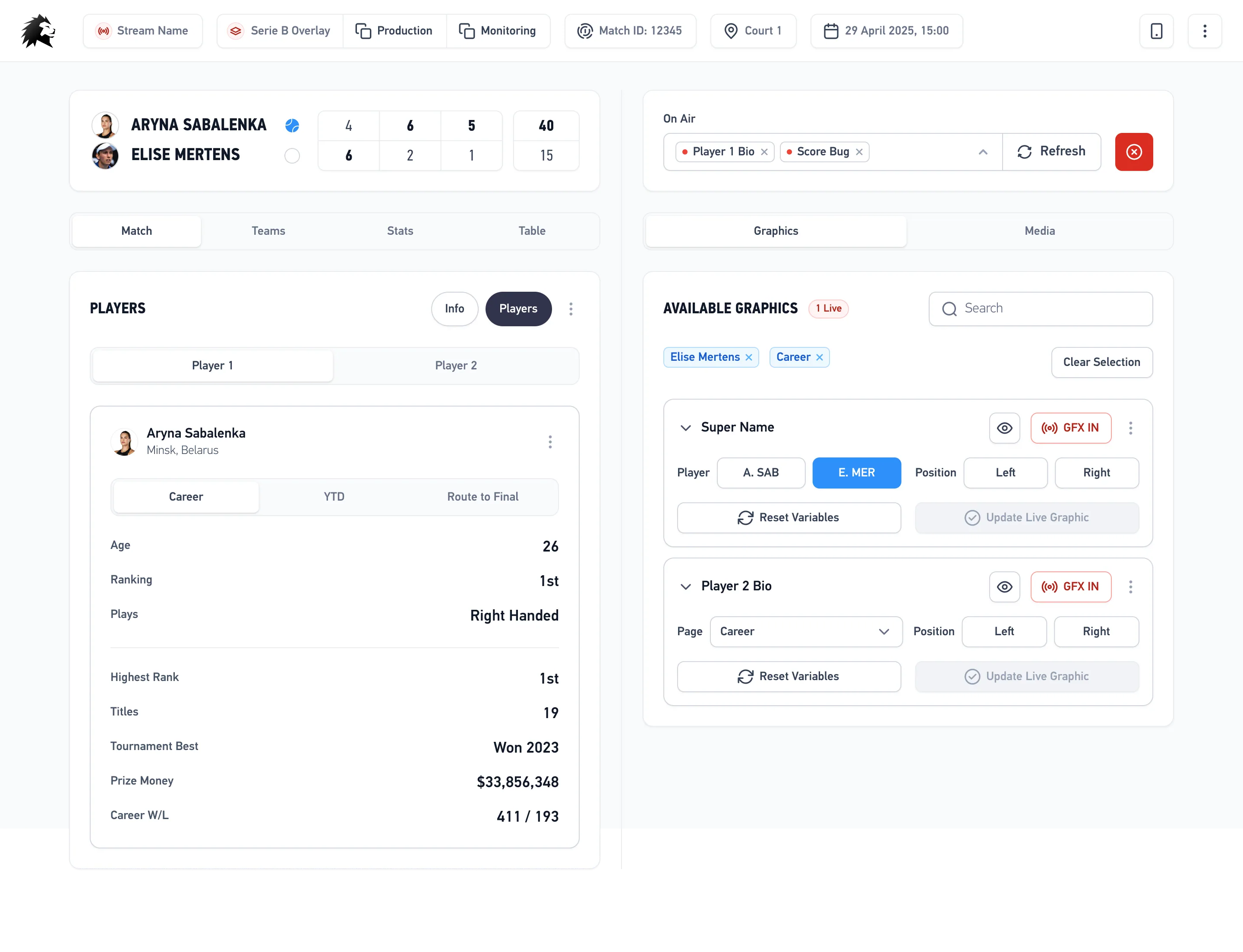
A gallery in a browser tab
Every graphic in the package, every trigger and every sponsor slot, driven from one screen. The operator can be in the truck, at home, or in another country, because the graphics are rendered in the cloud rather than on a box at the venue.
That is what removes the per-venue cost. There is no engine to ship, rack, power and recover when it fails at the worst moment.
Automation
Operators where they add something
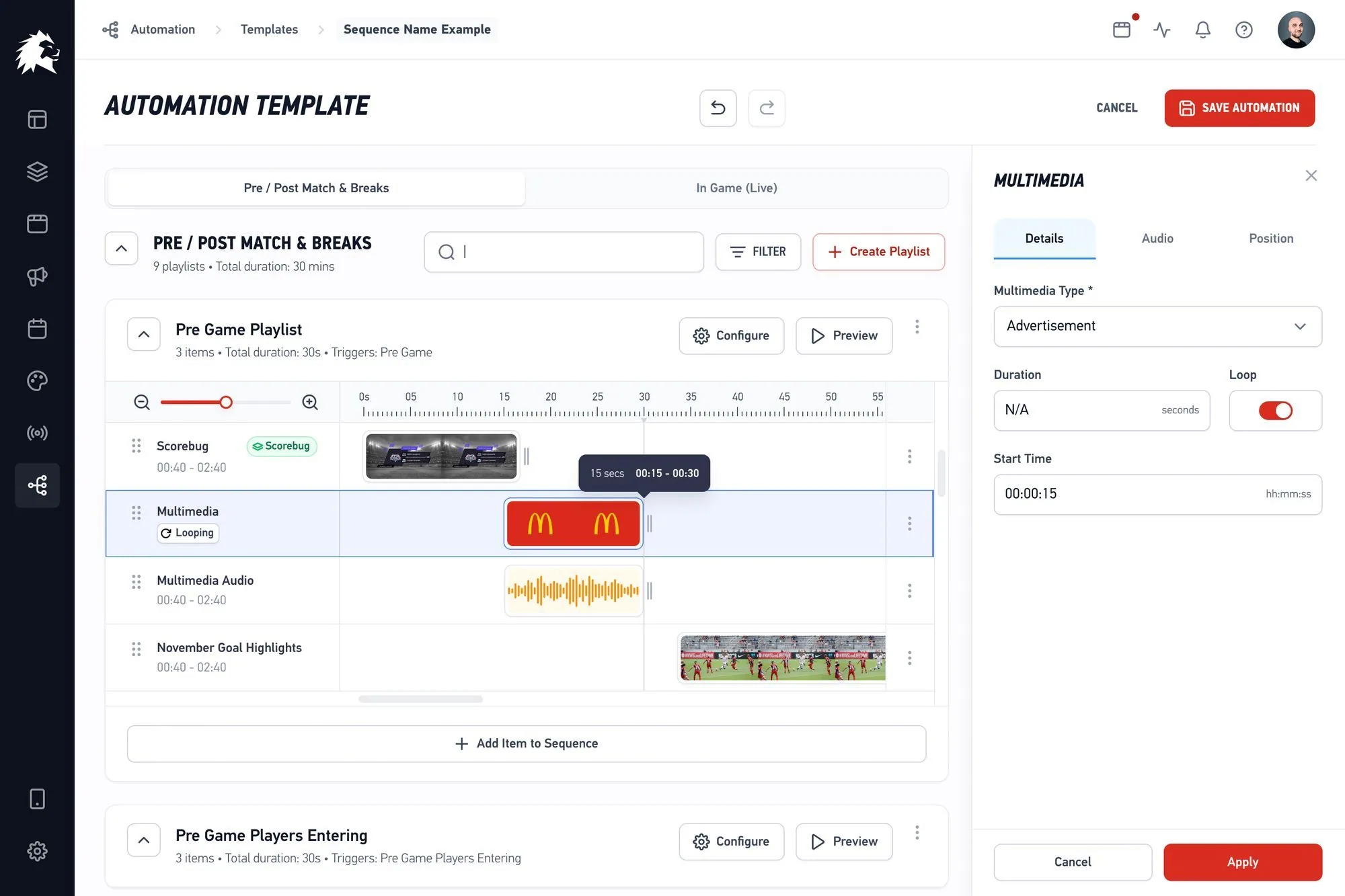
A Game Plan runs the predictable parts: the opener, the scorebug, the score changes, the ad breaks, the full-time graphic. An operator then handles the parts that actually need judgement, on the matches that warrant one.
For a rights holder with a long tail of fixtures, this is the whole argument. The top of the card gets a human. The rest still goes to air looking like it did.
Data
Nobody types the score in twice
Graphics bind to the competition's live data — the official feed, a scoring app at the ground, or an integration with the data provider already in the deal. The scorebug is a view of the match state rather than a thing somebody keeps up to date.
It is also where most on-air errors come from. Removing the second copy removes the class of mistake.
In production
Australia Cup on Paramount+
A national cup, with the studio rundown and the match graphics in one package of twenty graphics, run out of the Control Room in a browser. No dedicated graphics engines in the gallery. When the round of 32 produced an issue list, the fixes were confirmed live inside 24 hours, which is the part a broadcaster actually cares about.
Read the Australia Cup case study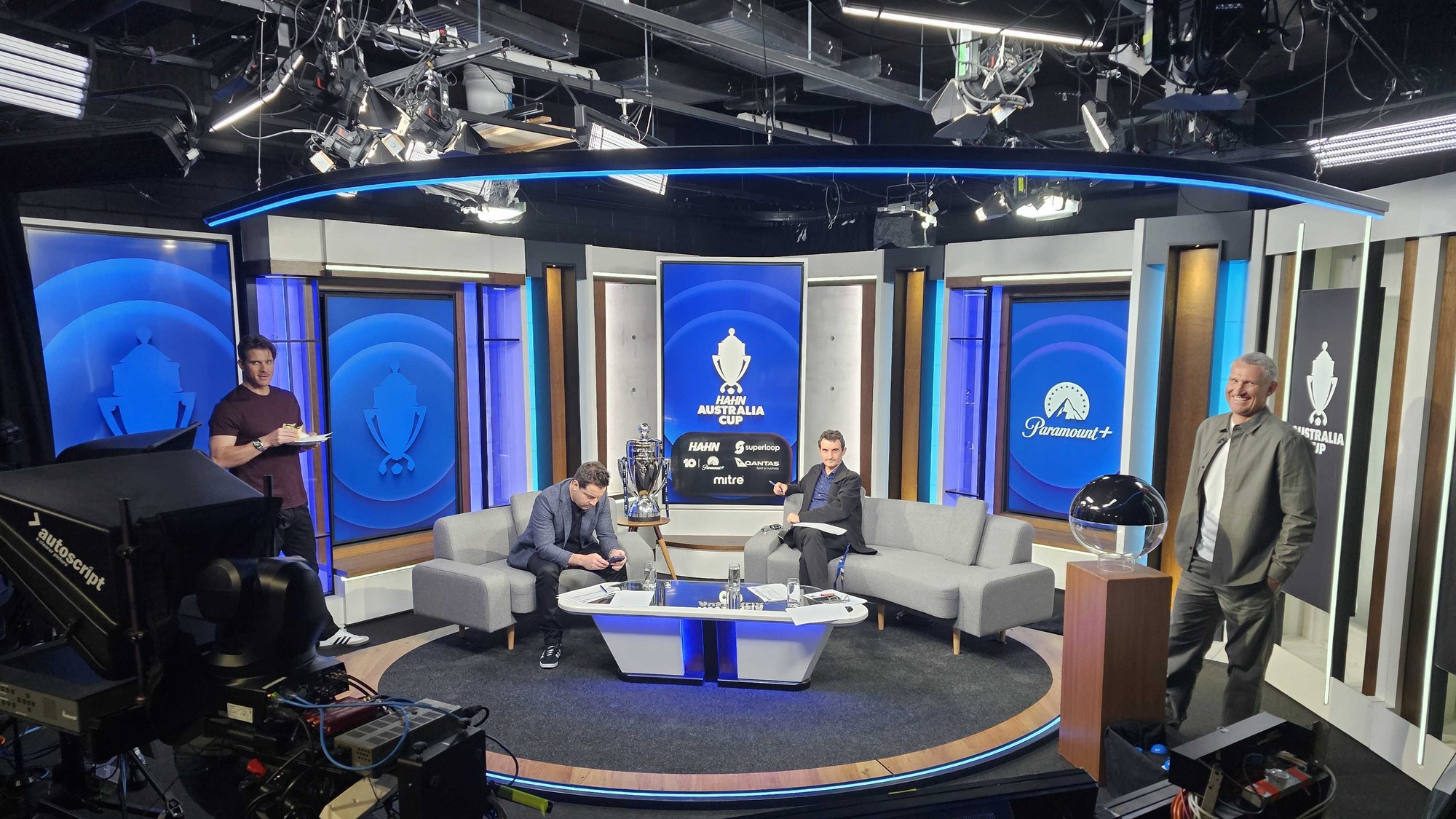
Frequently asked questions
Go deeper
More on the platform
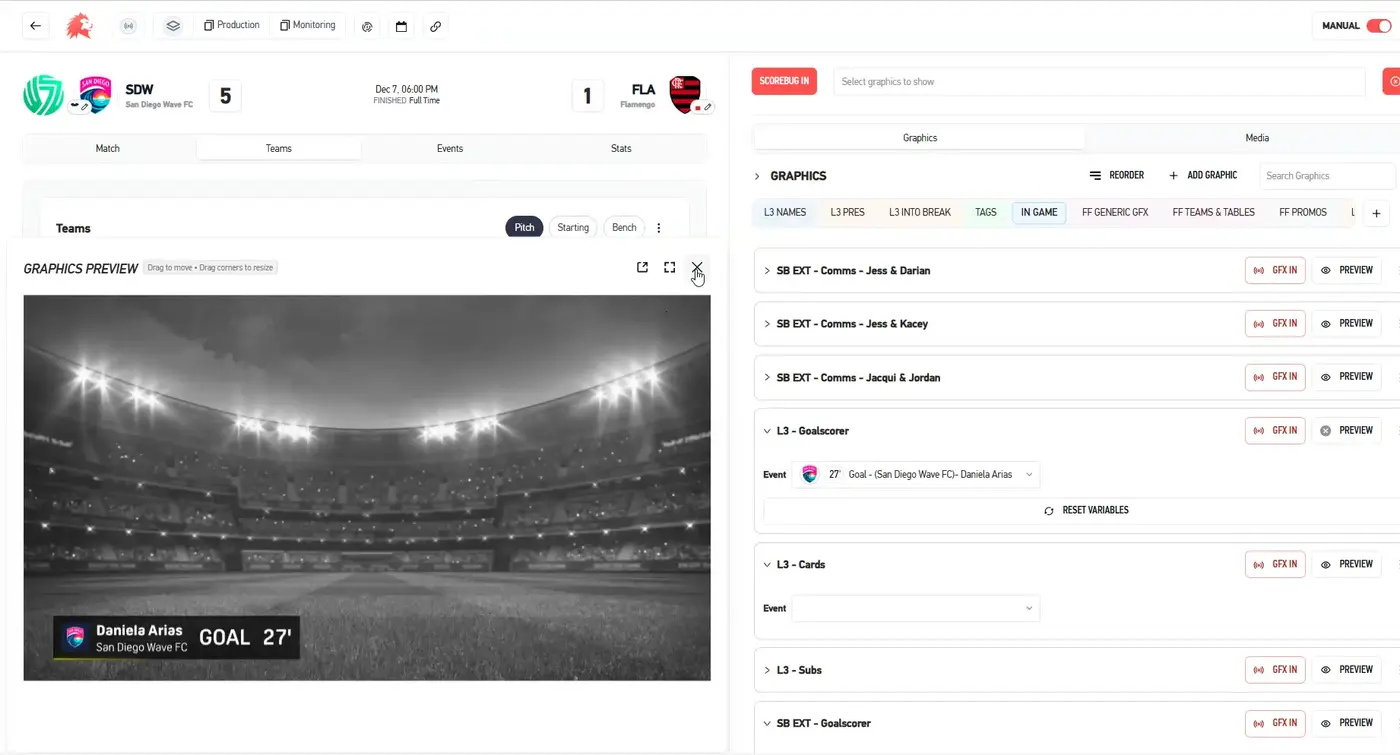
Control Room
The live interface: every graphic, trigger and sponsor slot on one screen.
See the Control Room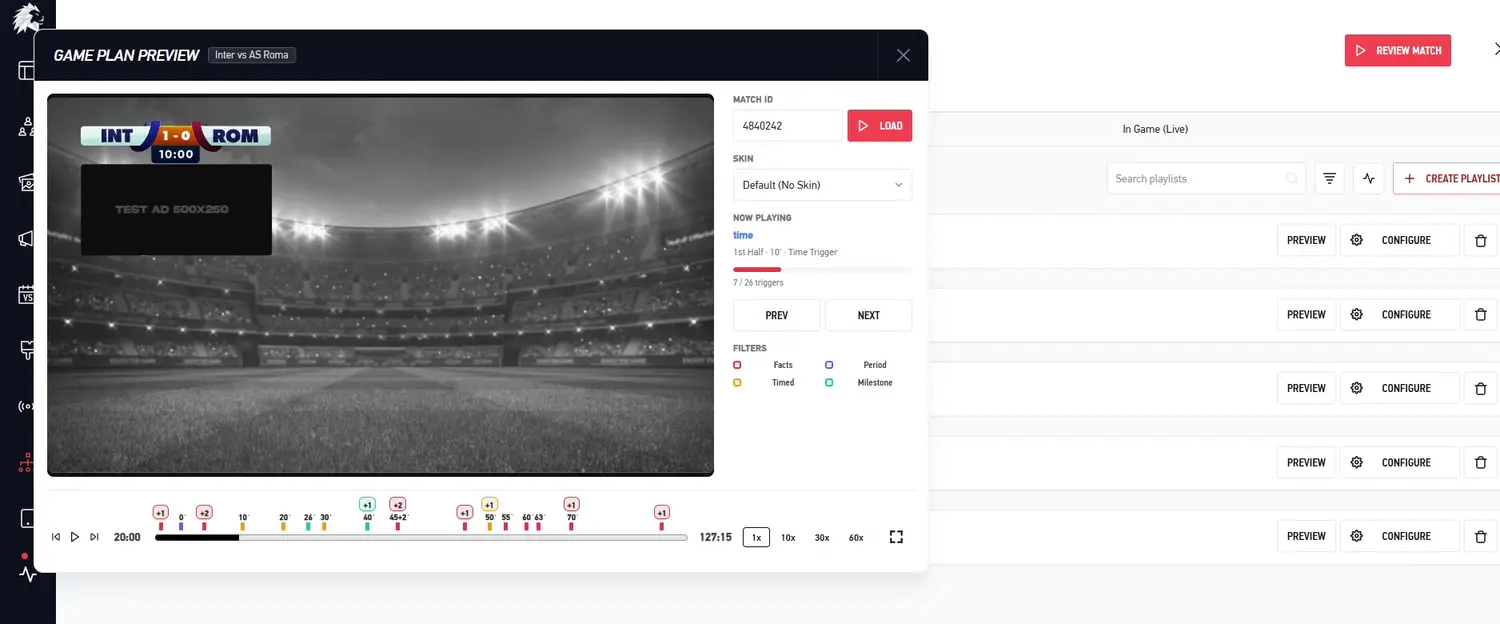
Game Plans
The broadcast sequence, configured once and run without an operator.
See Game Plans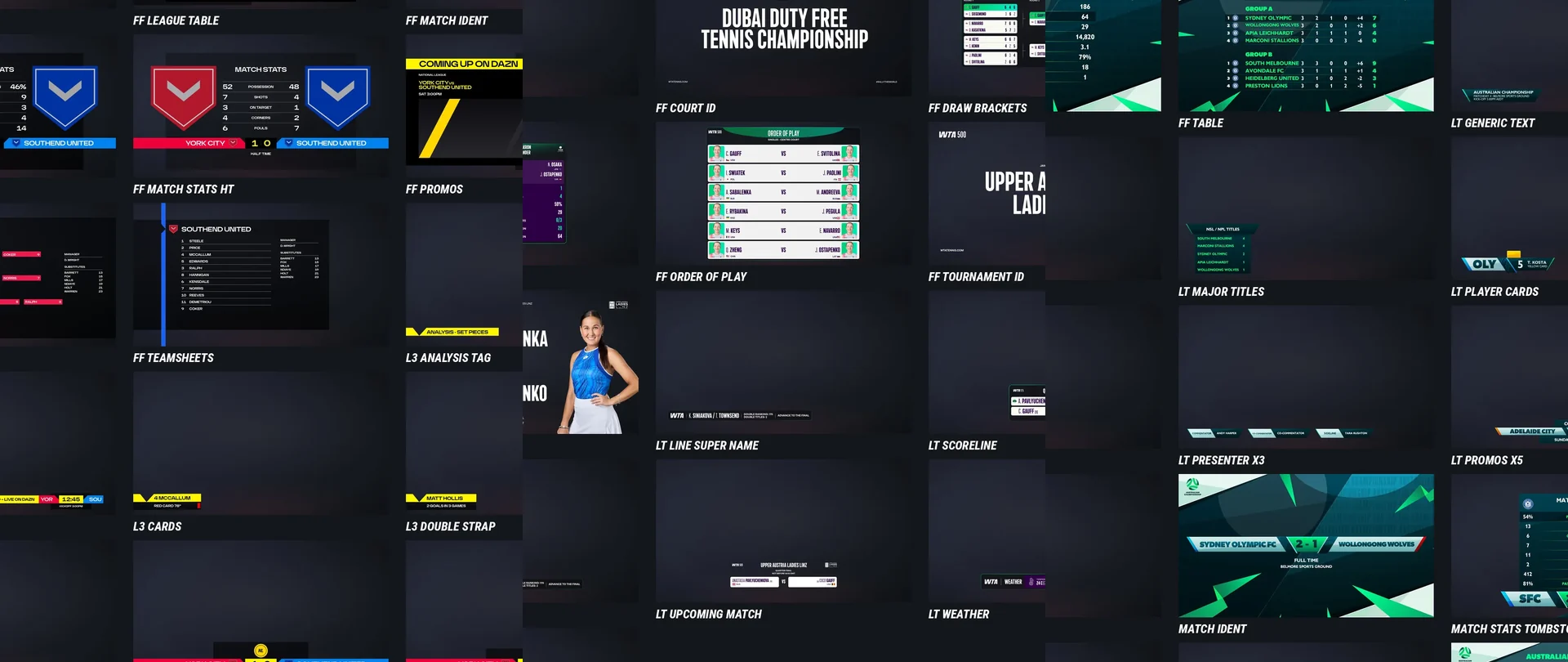
Custom broadcast packages
On-air looks built for DAZN, the WTA Tour, Tennis Australia and others.
See the packagesReady to elevate your sports broadcast?
Join hundreds of organisations using LIGR to deliver broadcast-quality production — from local leagues to national federations.