What is cloud production?+
Cloud production is live video production where the switching, graphics, replay, playout and delivery run as software in remote data centres rather than as hardware at the venue. Cameras, audio and an encoder stay at the ground. Everything downstream is operated from a browser by people who never travelled. It is also called cloud video production or live production in the cloud.
What is REMI production?+
REMI stands for Remote Integration Model, sometimes called at-home production. Cameras, microphones and an encoder stay at the venue, the feeds are backhauled over IP, and the director, vision mixer, replay and graphics operators work the match from a gallery somewhere else. REMI production removes travel rather than hardware. A fully cloud-native workflow goes further and removes the physical gallery as well.
What is cloud playout?+
Cloud playout is channel transmission running as software. The playlist, the live event windows, channel branding, interstitials, overlays and failover are scheduled and executed in cloud infrastructure instead of by video servers in a master control room. For sport it is what turns a season of individual match streams into a continuous OTT or FAST channel that keeps running between fixtures.
How much bandwidth do I need for remote production?+
There is no single number, only a shape. Your requirement is the encoder bitrate of one contribution feed, multiplied by the number of feeds leaving the venue, plus real headroom for retransmission rather than a tight fit. It scales with resolution, frame rate and codec. What matters is sustained upload under contention, not advertised download speed, so test the ground's actual uplink at the time of day you will be producing.
What equipment still has to be at the venue?+
The camera, because it has to be where the sport is. Audio capture. An encoder, which can be a hardware appliance, a laptop running OBS or vMix, or built into an AI camera. Power, and a connection with reliable sustained upload. Usually one person to rig the camera and confirm the feed is live before kick-off. Nothing else needs to be there.
Is cloud production cheaper than an OB truck?+
Usually at volume, but the saving is structural rather than a discount. Truck hire, hardware refresh, travel, accommodation and a fixed crew per fixture come off the budget. Connectivity at every venue, an encoder per venue and a platform subscription go on it. Truck production carries a high fixed cost per match, cloud production a low one, so the advantage grows with the number of fixtures.
How much latency does cloud video production add?+
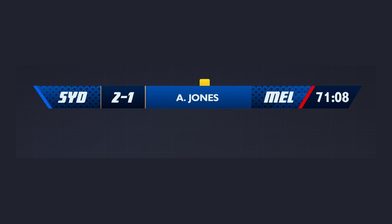
More than local hardware, and you should plan for it. An on-site chain of camera, mixer and screen holds end-to-end latency well under half a second. A cloud path adds encode, a transport buffer sized for retransmission, decode, processing and re-encode. A tuned SRT contribution leg can sit in the high hundreds of milliseconds, while a delivered OTT stream is normally measured in seconds.
Can automated sports production replace a production crew?+
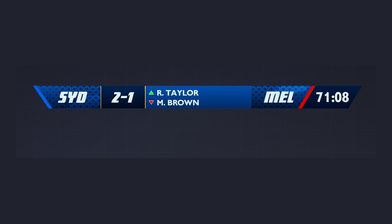
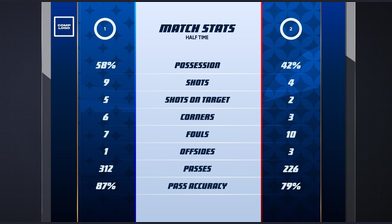
It replaces the deterministic parts. Scoreboards, clock-driven sequences, sponsor rotations, statistics and highlight clipping are rules and timestamps, and they need no operator. Editorial judgement is different. Reaction shots, knowing the story of a match and cutting away from an incident nobody scripted still need a person. Most competitions automate the routine fixtures and staff the handful that deserve a director.