The Grassroots Sports Media Opportunity Everyone Is Ignoring

In 2026, the global sports media rights market will surpass $60 billion. The overwhelming majority of that money flows to elite-level sport: Premier League football, the NFL, Formula 1, the NBA. The top of the pyramid commands eye-watering fees, and every major broadcaster and OTT platform is fighting for a seat at the table.

But there’s a massive blind spot. Beneath the elite tier sits an ocean of semi-professional, amateur, and grassroots sport that generates enormous passion, loyal fanbases, and commercial potential — yet almost none of it is being captured, broadcast, or monetised.

This is the grassroots sports media opportunity. And the organisations that recognise it first will build the most defensible competitive advantages in the industry.
The Scale of Unbroadcast Sport: Why 99% of Matches Go Unseen
Consider the numbers. A single national football federation might oversee 10,000 to 50,000 matches per year across its various leagues, age groups, and cup competitions. Of those, the traditional broadcast model can afford to cover maybe 50 to 100 — the top-tier, flagship matches that justify the production cost.
That means 99% of matches go unbroadcast. Not because nobody wants to watch them — parents, families, local fans, scouts, and diaspora communities absolutely do — but because the economics of traditional production don’t work at that scale.
Now multiply that across every football federation in every country. Add in rugby, basketball, netball, field hockey, cricket, tennis, volleyball, handball, water polo. The volume of unbroadcast sport globally is staggering.
Every one of those matches is a piece of content that could be captured, broadcast, and monetised. Every one of them represents fan engagement that’s being left on the table.
Why the Economics of Grassroots Sports Broadcasting Have Changed
The reason grassroots sport was historically unbroadcast isn’t complicated: it cost too much to produce relative to the revenue it could generate. A traditional outside broadcast setup — crew, equipment, satellite or bonded cellular uplink, graphics, streaming — could easily run $5,000 to $15,000 per match. No grassroots league generates enough sponsorship or viewership to justify that.
Three things have changed.
First, camera technology has democratised capture. Fixed automated cameras can cover a full pitch without an operator. Mobile phones can stream in broadcast-ready quality. The cost of getting footage from a venue into the cloud has plummeted.
Second, cloud-based production platforms have eliminated the need for onsite production crews. Graphics, streaming, highlights, and distribution can all be handled remotely — or fully automatically. The per-match cost of production has dropped by an order of magnitude.
Third, distribution has become free and frictionless. YouTube, Facebook, TikTok, and Twitch don’t charge to host live streams. Social media platforms actively reward live video content with algorithmic promotion. The distribution barrier that once existed — needing a broadcast license or a pay-TV deal — is gone.
The result is a new economic equation: the cost of producing a grassroots match has fallen below the revenue that match can generate through sponsorship, content licensing, and fan engagement. The break-even point has shifted. And that changes everything.
The Content Flywheel: How Grassroots Sports Broadcasting Compounds Value
Here’s where the grassroots opportunity gets genuinely exciting. It’s not just about broadcasting more matches — it’s about what happens when you do.
Every broadcast match generates content. Highlights, key moments, statistical graphics, full match records. That content feeds social media channels. Social media engagement grows the audience. A larger audience makes the content more attractive to sponsors. Sponsor revenue funds more production. And the cycle compounds.
This is the content flywheel, and it’s incredibly powerful at the grassroots level because the starting point is so low. When you go from zero broadcast matches to broadcasting every match in a league, you’re not incrementally improving content output — you’re creating an entirely new media asset from nothing.
A league that broadcasts all its matches and publishes automated highlights to social media will, over a single season, build a content library that has real commercial value. That library can be packaged for OTT platforms, offered to betting operators, used in highlight compilations, and leveraged in rights negotiations.
The Digital Sponsorship Model That Actually Works for Grassroots Sport
Traditional sports sponsorship at the grassroots level is painful. It’s local businesses paying for static banners around the pitch, with no measurement, no targeting, and no way to demonstrate ROI. Sponsors tolerate it as community support, not as a marketing investment.
Digital broadcast sponsorship is fundamentally different. When a match is streamed with dynamic graphics, sponsors get their brand integrated directly into the broadcast experience — on scoreboards, in lower thirds, during highlight clips, and across social media content. Every impression is tracked, measured, and reported.
This transforms the sponsor conversation. Instead of asking a local business to pay for a banner that might be seen by 200 people at the ground, you’re offering them measurable digital impressions across a livestream, social media highlights, and archived content that continues generating views long after the final whistle.
The numbers tell the story. A league that broadcasts 500 matches per season, each averaging even modest viewership, can generate millions of sponsor impressions. Add automated highlight publishing to social media — where content often outperforms the live stream in total views — and the impression count multiplies further.
For the first time, grassroots sports organisations can offer sponsors something that looks and feels like a professional media buy. That unlocks budget that was never previously accessible to sport at this level.
The Club Empowerment Model: Decentralised Content, Centralised Quality
One of the most powerful aspects of the grassroots media opportunity is the ability to decentralise content management while centralising production.
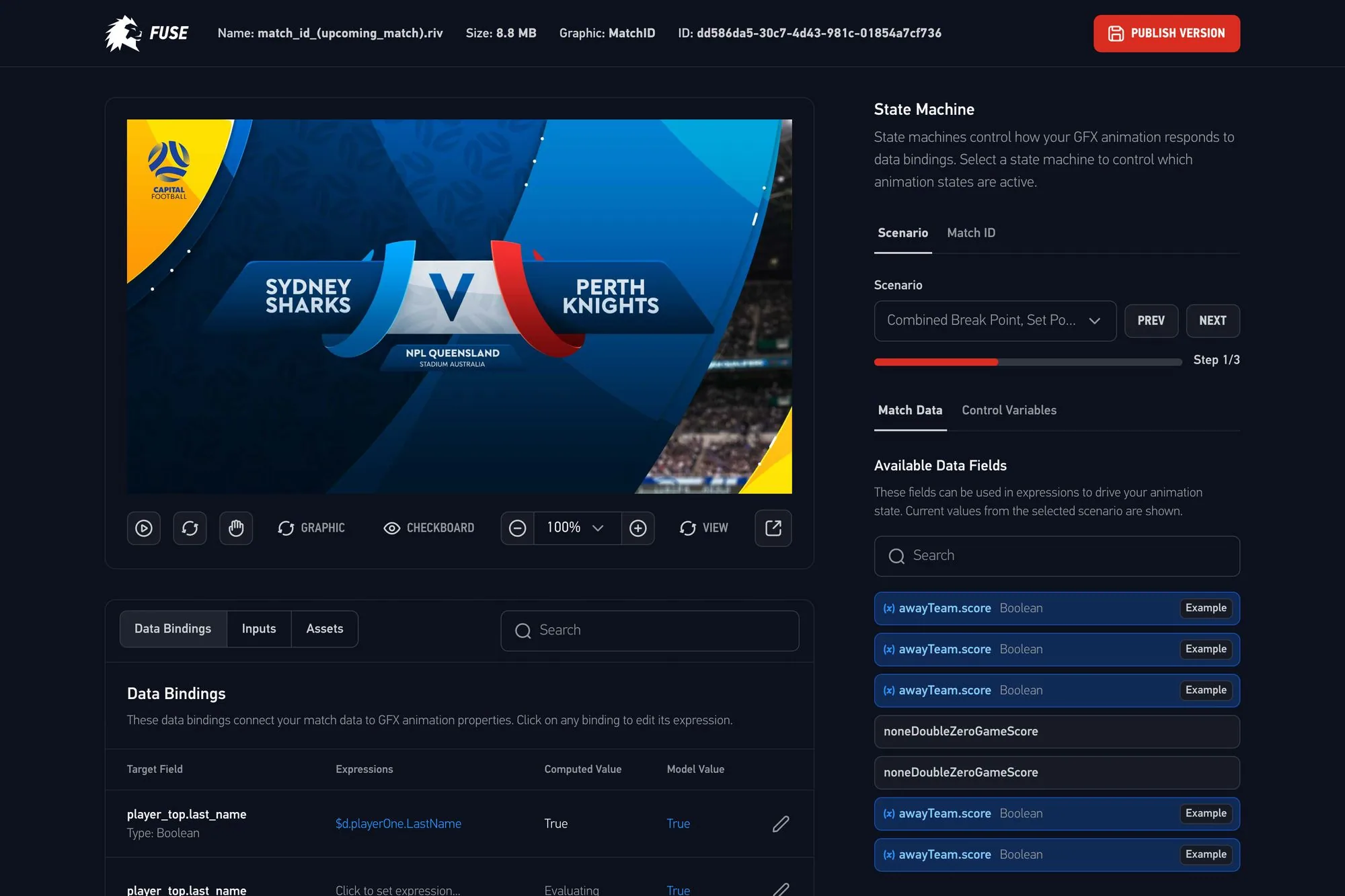
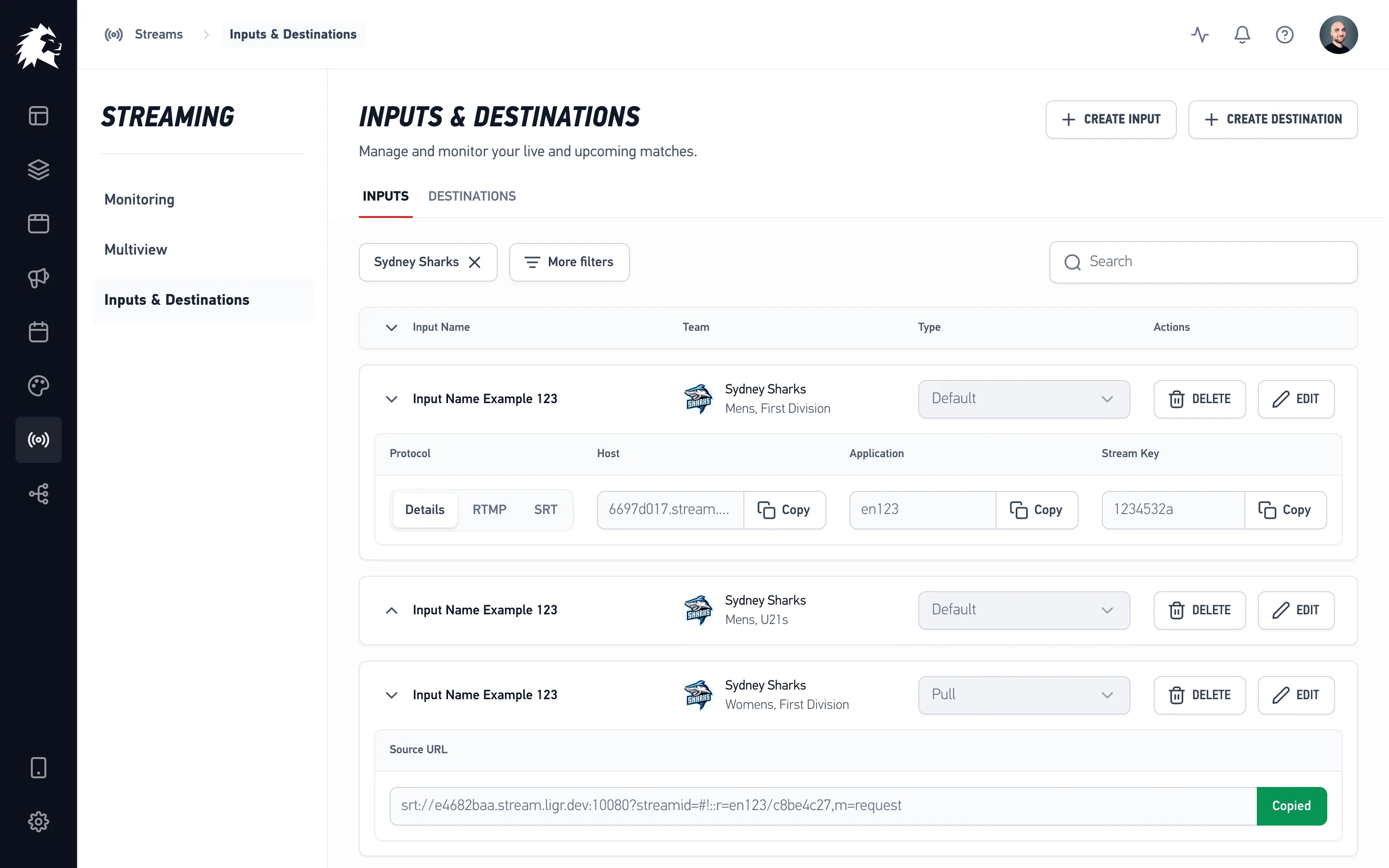
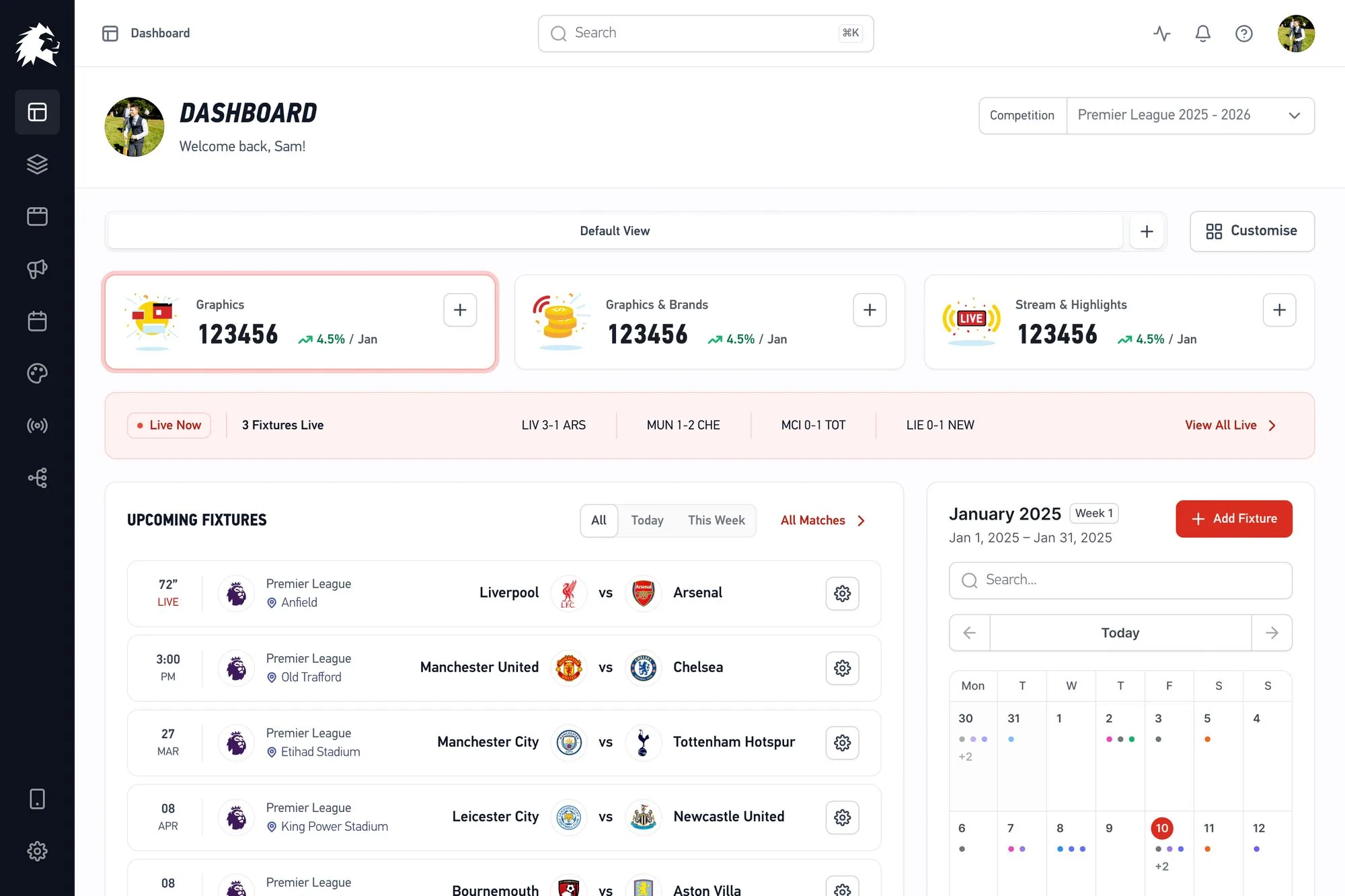
In a well-designed platform, the governing body (federation, league, association) controls the overarching production standards: the graphic themes, the streaming infrastructure, the data integrations, the master commercial inventory. But individual clubs can manage their own branding, upload their own sponsor content, manage their team rosters and player images, access their own highlights, and publish to their own social media channels.
This is club empowerment. It means the federation doesn’t need to manage every detail for every club. Clubs become active participants in the media ecosystem — uploading their sponsors, sharing their highlights, building their own digital presence — while the federation maintains quality control and brand consistency.
The clubs that engage most actively with this model are the ones that see the biggest returns: more social media followers, better sponsor relationships, stronger community engagement. And the federation benefits from a network effect — hundreds of clubs all producing and sharing content, all driving attention back to the league.
What the Data Reveals: Analytics for Every Level of Sport
When you broadcast every match in a league, you generate data at a scale that was previously impossible at the grassroots level.
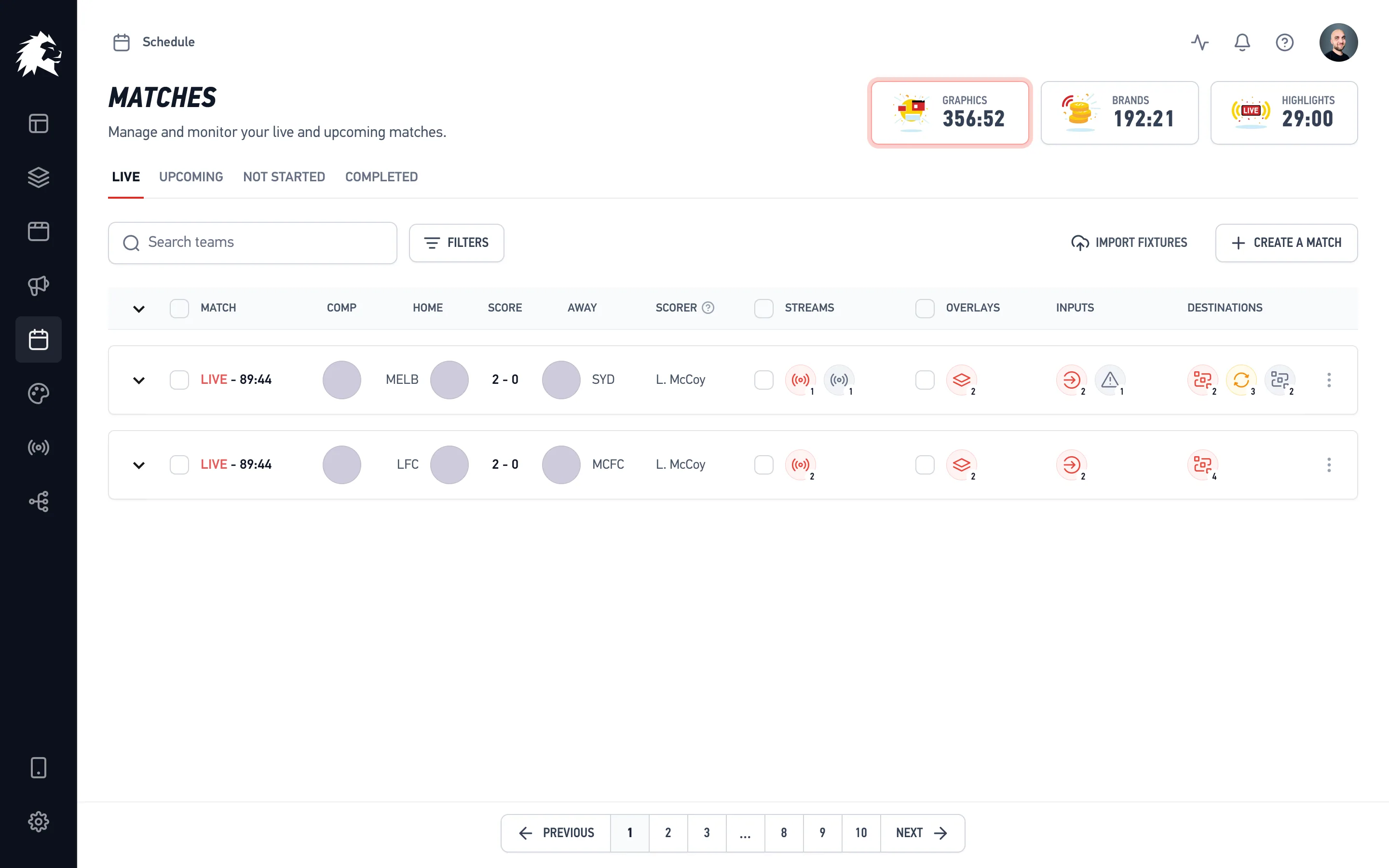
Stream analytics tell you which matches draw the most viewers, which time slots perform best, and which platforms generate the most engagement. Sponsor analytics show exactly how many impressions each brand received, across which matches, and in which formats. Content analytics reveal which highlights get shared most, which players generate the most engagement, and which types of moments resonate with fans.
Over a season, this data becomes a strategic asset. It informs scheduling decisions, shapes sponsor packages, guides content strategy, and strengthens the organisation’s position in rights negotiations. Data-driven decision making, which was once the exclusive domain of elite sport, becomes available to every level.
The First-Mover Advantage in Grassroots Sports Media
The grassroots media opportunity is real, it’s large, and it’s largely untapped. But it won’t stay that way forever.
Organisations that move first — that invest in centralised production infrastructure, build their content flywheels, and establish digital sponsor relationships now — will have a compounding advantage over those that wait.
Every season of content builds the library. Every season of sponsor relationships deepens the commercial partnerships. Every season of fan engagement grows the audience. The organisations that start earliest will have the most mature, most valuable media operations by the time the rest of the market catches up.
The question for every sports organisation at the grassroots and semi-professional level is straightforward: are you going to capture the value of your content, or are you going to let it disappear on the pitch?
The technology exists. The economics work. The opportunity is there. The only thing missing is the decision to act.
Frequently Asked Questions
What is grassroots sports broadcasting?
Grassroots sports broadcasting refers to the live streaming, recording, and digital distribution of amateur, semi-professional, and community-level sporting events. Unlike elite sports broadcasting, grassroots broadcasting uses automated cameras, cloud-based production platforms, and free distribution channels to make coverage economically viable at scale.
How much does it cost to broadcast a grassroots match?
With modern automated camera systems and cloud-based production platforms, the cost of broadcasting a grassroots match has dropped dramatically — often to a fraction of the $5,000–$15,000 that traditional outside broadcast setups require. The exact cost depends on the technology stack, but the economics now allow grassroots organisations to broadcast every match in a league profitably.
Can grassroots sports generate real sponsorship revenue?
Yes. Digital broadcast sponsorship transforms the grassroots sponsorship model from unmeasured static banners to tracked, reported digital impressions integrated into livestreams, scoreboards, highlight clips, and social media content. A league broadcasting 500 matches per season can generate millions of measurable sponsor impressions, unlocking marketing budgets that were never previously accessible to sport at this level.
What is the content flywheel in grassroots sport?
The content flywheel is the compounding cycle where broadcasting matches generates highlights and social media content, which grows the audience, which attracts sponsors, which funds more production, which creates more content. At the grassroots level, this flywheel is especially powerful because the starting point is typically zero — meaning any investment in broadcasting creates entirely new media assets.
Why should sports organisations act now on grassroots media?
First-mover advantage is significant. Every season of broadcasting builds a content library, deepens sponsor relationships, and grows the audience. Organisations that start earliest will have the most mature and valuable media operations by the time competitors enter the space. The technology and economics already support grassroots broadcasting at scale — the only barrier is the decision to begin.
LIGR helps sports organisations at every level capture, broadcast, and monetise their content with cloud-based production, TV-quality graphics, and automated highlights. See how it works at ligr.live
.png)